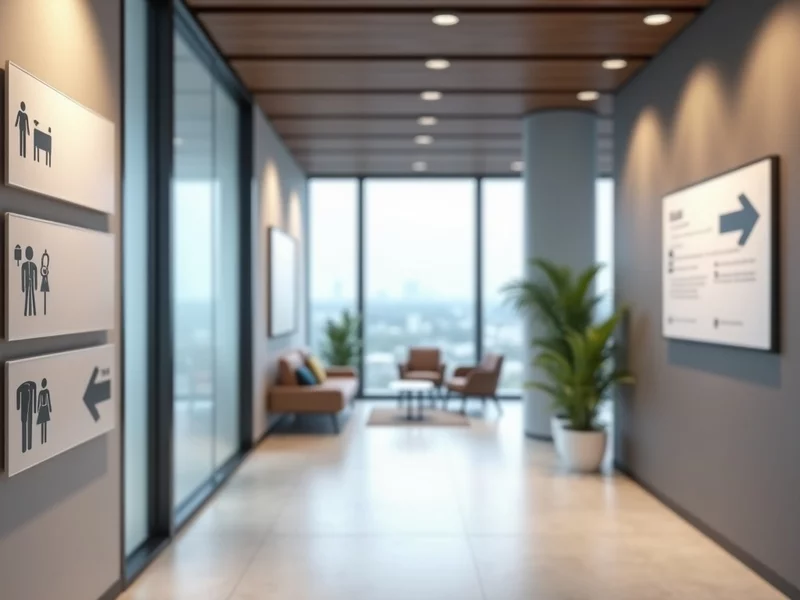
Directional Signage
Guides users towards important locations within a building, such as restrooms, exits, and conference rooms.
The modern workplace is often a maze of offices, conference rooms, and common areas. How can you ensure that everyone, from new hires to visitors, can navigate through it seamlessly? The answer lies in effective wayfinding systems that rely heavily on well-designed office signage.
Understanding the different types of office signage can enhance wayfinding and navigation. Below are key categories of signage, providing insight into their roles and benefits in office environments.
Guides users towards important locations within a building, such as restrooms, exits, and conference rooms.
Clarifies what each space is used for, including meeting rooms and private offices.
Provides additional context such as office hours and contact information.
Comprehensive maps that assist visitors in locating offices and departments within a facility.
Critical for safety, guiding individuals to exits during emergencies.
In today’s fast-paced work environment, effective wayfinding is more crucial than ever. Wayfinding refers to the methods and systems that help people navigate spaces, especially in places like offices or large buildings. It’s all about making sure everyone can find their way around without confusion, and this is where signage plays a vital role. Imagine walking into a huge office building for the first time—without proper signage, it can feel overwhelming! You might also be interested in exploring creative signage ideas for offices to further enhance your workplace environment.
Wayfinding isn’t just about getting from point A to point B; it’s about creating a seamless experience for employees and visitors alike. Good signage helps reduce stress by providing clear information and directions. When companies invest in high-quality signage, they not only enhance the visitor experience but also improve overall workplace efficiency.
At Commercial Signage Solutions, we understand the importance of well-designed signage in wayfinding systems. Our goal is to assist local businesses in creating signage that reflects their brand while also guiding users effectively through their spaces. After all, the first impression is often the most lasting!
There are several types of office signage, each serving a unique purpose in the wayfinding process. Understanding these types can help businesses choose the right solutions for their needs. Here are the most common categories:
Directional signage is essential for guiding people through complex spaces. These signs point users toward important locations such as conference rooms, restrooms, and exits. Well-designed directional signage ensures that individuals can navigate the building with confidence, reducing the time spent searching for their destinations. To effectively guide visitors, consider the benefits of effective use of sidewalk signs as part of your overall wayfinding strategy.
For instance, consider an office where employees frequently travel between various departments. Clear directional signs can make all the difference in helping them find their way. This not only minimizes disruption but also promotes a smoother workflow throughout the day.
Identification signage helps clarify what each space is used for. This can include signs for meeting rooms, private offices, or communal areas. Meanwhile, informational signage provides additional context, like office hours or contact information. Both types are crucial for creating a well-organized environment where everyone knows what to expect.
Imagine walking into an office and seeing clear signs that tell you exactly what room is what. It makes your visit so much easier, right? That’s what we aim to create at Commercial Signage Solutions—signs that not only look great but also serve a practical purpose.
Building directories are comprehensive maps that help visitors locate various offices or departments within a facility. They are particularly useful in larger buildings where finding the right area can be challenging. On the other hand, emergency exit signs are critical for safety, guiding people toward exits during emergencies.
Having both types of signage enhances not only the aesthetic but also the functionality of a building’s design. At Commercial Signage Solutions, we prioritize the integration of these elements to boost user experience and safety. For more insights on how to make your office stand out, explore how to boost office visibility with signs.
As technology evolves, so do signage solutions. The shift towards hybrid systems that combine physical signs with digital technology is gaining traction. This integration allows businesses to update information in real-time, keeping everyone informed without the need for constant reprinting of materials.
For example, a digital directory can be updated with ease, while physical signs provide a permanent reference. This combination enhances the user experience, making navigation simpler and more efficient.
When it comes to office signage, user-centered design is key. This means considering the needs of all users, including compliance with the Americans with Disabilities Act (ADA) to ensure accessibility. Signage should cater to diverse populations, making it easy for everyone to find their way.
At Commercial Signage Solutions, we believe that thoughtful design can transform how users interact with their environments, making accessibility a top priority.
Effective signage relies on strong information design and visual communication. This involves presenting information in a way that is not only clear but also engaging. The right combination of colors, fonts, and layouts can make a significant impact on how the message is received.
Consider how a well-designed sign can communicate a message at a glance. This is crucial in busy office environments where people are often on the move. Our team at Commercial Signage Solutions focuses on creating signage that conveys information clearly and attractively.
Investing in effective wayfinding systems can lead to measurable improvements in productivity and cost savings. When employees can navigate their workspace efficiently, they spend less time searching for meeting rooms or departments, leading to higher overall productivity.
Moreover, a well-organized environment can enhance employee satisfaction and retention. By improving the wayfinding experience, businesses can ultimately boost their bottom line! At Commercial Signage Solutions, we are committed to helping you achieve these outcomes through tailored signage solutions.
The future of wayfinding systems is exciting, with emerging technologies like AI, augmented reality (AR), and mobile app integrations playing significant roles. These innovations can provide interactive maps, real-time updates, and personalized navigation experiences. Imagine having an app that guides you to your meeting location while providing information about the office layout!
As a signage expert, I see the incredible potential that technology brings to the table. It’s essential for businesses to stay ahead of these trends to enhance the user experience and increase efficiency. For more insights on modern trends, see our article on 2023 office signage design trends.
Looking at real-world applications of office signage can provide valuable insights and lessons learned. Various industries have successfully implemented effective signage solutions that have led to measurable outcomes. From hospitals to corporate offices, the right signage strategy has proven to enhance wayfinding and user experience.
For example, a corporate office that underwent a signage overhaul saw a significant reduction in lost time due to improved navigation. By analyzing these case studies, we can help you tailor a signage solution that fits your specific needs and challenges.
Did you know? Incorporating user feedback into your signage design process can significantly enhance wayfinding effectiveness. Engaging with employees and visitors to understand their navigation challenges can lead to more intuitive signage solutions that cater to real-world needs.
Before diving into any new signage project, it's crucial to conduct a thorough assessment of your existing wayfinding systems. This includes reviewing current signage effectiveness, understanding user flow, and identifying areas for improvement. At Commercial Signage Solutions, we often start with a detailed evaluation process that helps pinpoint specific needs and gaps.
The assessment can follow these key steps:
By thoroughly assessing your current system, you can lay a solid foundation for implementing an effective wayfinding solution that truly meets the needs of your users.
Developing a signage strategy is about more than just choosing pretty graphics; it’s about understanding your users! Focusing on user research ensures that your signage resonates with those who will interact with it daily. This means diving into their preferences and behaviors.
Key components to consider while developing your signage strategy include:
At Commercial Signage Solutions, we prioritize user-centered design to ensure that your signage not only looks great but also serves its purpose effectively.
Introducing new signage systems can sometimes cause apprehension among employees. To ease this transition, it’s essential to have a well-planned change management strategy. This ensures that everyone is on board and feels comfortable with the new wayfinding elements.
Here are some effective strategies for fostering acceptance:
By addressing concerns and promoting engagement, you can help your team embrace the new wayfinding solutions, making for a smoother transition.
Once your signage systems are in place, it’s vital to keep them well-maintained. Regular maintenance not only prolongs the lifespan of your signage but also ensures that it continues to serve its purpose effectively. Neglected signs can lead to confusion and frustration. You can find more information on caring for office signage basics to keep your signs in top condition.
Some maintenance practices to consider include:
At Commercial Signage Solutions, we emphasize the importance of regular check-ups to keep your signage looking fresh and functional.
Lastly, it’s crucial to evaluate the effectiveness of your wayfinding systems continually. Understanding how well your signage is working can lead to valuable insights for future projects. If certain elements aren’t achieving desired outcomes, adjustments may be necessary.
Consider these methods for measuring success:
With these insights, you can iterate on your designs, ensuring they evolve alongside your users' needs and expectations.
A: Wayfinding refers to the methods and systems that help people navigate spaces. In an office, it's crucial for reducing stress, improving efficiency, and ensuring employees and visitors can easily find their way around without confusion. Effective wayfinding enhances the overall experience and productivity.
A: The article highlights several key types: Directional Signage (guides towards locations), Identification Signage (clarifies space use), Informational Signage (provides context like hours), Building Directories (comprehensive maps), and Emergency Exit Signs (critical for safety).
A: Digital technology can be combined with physical signs to create hybrid systems. This allows for real-time updates of information, interactive maps, and personalized navigation experiences, enhancing user experience and efficiency. Physical signs provide a permanent reference while digital signs offer dynamic content.
A: User-centered design is crucial, including compliance with ADA standards. This involves using clear fonts and contrasting colors for readability, incorporating braille and tactile elements for the visually impaired, and positioning signs at appropriate heights for visibility to cater to diverse populations.
A: Effective wayfinding systems lead to measurable improvements in productivity and cost savings. Employees spend less time searching for locations, which increases efficiency. A well-organized environment also enhances employee satisfaction and retention, ultimately boosting the business's bottom line.
As we’ve discussed, effective wayfinding systems are essential for any office environment. By embracing modern signage strategies and user research, we can create inviting spaces that guide and inform. Remember, the goal is to adapt and evolve, ensuring your signage always meets user needs.
Now is the perfect time to evaluate your current wayfinding systems! Let Commercial Signage Solutions help you enhance your office signage for improved navigation and user experience. Contact us today to get started!
Here is a quick recap of the important points discussed in the article:
Miles Kensington is a seasoned signage expert with over 15 years of experience in the commercial signage industry. Passionate about helping local businesses enhance their visibility and branding, Miles combines creativity with technical expertise to deliver custom signage solutions that meet the unique needs of each client. He is dedicated to staying ahead of industry trends and ensuring that each project reflects the professional image that businesses strive to portray.